



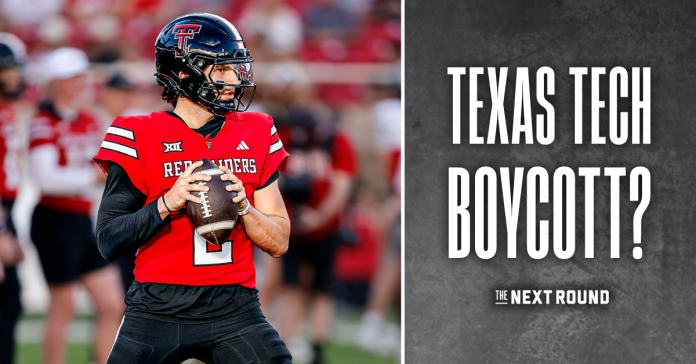
One of the cardinal sins in all of sports is gambling on your own team. While many athletes have been caught doing so, Brendan Sorsby might be involved in one of the most shocking cases we have seen.
Sorsby, currently the starting quarterback for Texas Tech, has reportedly been linked to more than $90,000 in gambling activity over the past few years, with at least 40 bets involving his own team. I would like to think that most people around the country would agree that he should not be allowed to play during the 2026 college football season. However, a judge recently granted him an injunction that preserves his eligibility for the upcoming season.
Because of this ruling, many fans and teams across the country have voiced strong opposition, arguing that it creates an unfair situation for everyone else. Several potential consequences have been discussed, but one idea that stands out is the notion of completely removing Texas Tech from every opponent’s schedule. While that may not be practical, it is interesting to consider what such a boycott would mean for the college football landscape.
The first thing that comes to most people’s minds is the College Football Playoff. As the pinnacle of the sport, the playoff is where every contender hopes to end up. If teams decided not to play Texas Tech, it could significantly impact strength of schedule and overall records across the country. As we all know, a single loss—or even the absence of a quality win—can make a major difference when competing for a playoff spot.
Another issue would be the impact on the Big 12 Conference. If enough athletic directors within the conference became frustrated with the situation, it could create significant pressure on conference leadership. That pressure could potentially lead the Big 12 to encourage Texas Tech to bench Sorsby or to support efforts aimed at overturning the court ruling through the NCAA appeals process.
There is also the practical issue of scheduling. College football schedules are created years in advance. If teams suddenly decided not to play Texas Tech, who would replace those games? At that point, the situation would likely require more than simply removing Sorsby from the field—it could mean effectively removing the entire Texas Tech program from the 2026 season.
While this scenario may seem like a minor inconvenience to the average college football fan, the reality is that removing even a single team from the ecosystem could create significant ripple effects throughout the sport. College football is deeply interconnected, and a decision of this magnitude would impact schedules, conference races, playoff positioning, television contracts, and much more. It serves as a reminder of how much the actions of one player—or one program—can affect the broader game we know and love.
