



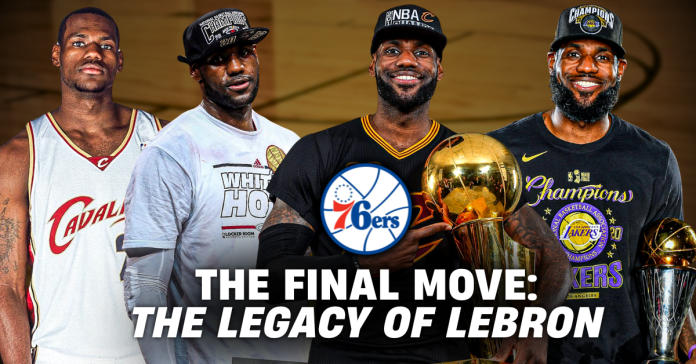
LeBron James is one of—if not the—most decorated players in NBA history. At 41 years old, he has played 23 seasons and has just signed a two-year contract with the 76ers. LeBron is widely considered a top-three player of all time, and some would even argue he is the greatest to ever play the game. He has won four NBA championships, four MVP awards, earned 22 All-Star selections, and is the NBA’s all-time leading scorer. He is one of the most impactful players to ever step onto a basketball court and has become a global icon.
But I’m not here to nitpick his statistics.
LeBron’s legacy has always been surrounded by the age-old question: Is he the greatest of all time? Or, if he isn’t already, does he still have time to become the greatest?
I think the second part of that question is the most important.
Can he still get there?
In my opinion, no.
Not because he isn’t already—which I personally don’t believe he is—but because I don’t think there’s anything he can accomplish at this stage of his career that would definitively cement him as the greatest player ever.
For years, people have argued that while LeBron reigns supreme statistically, is it because he’s truly that dominant, or simply because he’s played for so long? If you ask me, the longer he plays, the more he risks tarnishing his legacy. Longevity, in some ways, waters down the impact of his accomplishments because every additional season makes career totals feel more like a product of time than dominance.
Let’s look at some of the greatest players to ever play the game: Michael Jordan, Kobe Bryant, Larry Bird, Magic Johnson, and even Stephen Curry. Regardless of where you rank them, one thing consistently defines their greatness: championships.
Another thing they largely have in common is loyalty. Jordan spent only two seasons with the Wizards after his second retirement, while Bird, Magic, Kobe, and Curry spent the overwhelming majority—or all—of their careers with one franchise. There’s something to be said for that. Loyalty matters, and in my opinion, it plays a significant role in how a player’s legacy is remembered.
LeBron, on the other hand, has played for three franchises (and is about to join a fourth) while spending time with five different teams across multiple stints. He has won championships with three different organizations. While that’s undeniably impressive, it also raises the question of whether he built championship teams or simply positioned himself to join them. Many critics refer to this as “ring chasing.”
The point I’m making is this: If LeBron had stayed with his original team—or even his second team—would the championships have followed? There’s no way to know. That uncertainty is part of his legacy, and it’s a question that exists because of the career decisions he made.
At this point, I don’t believe another championship would significantly strengthen his case. The reality is that he simply can’t impact the game the way he did 10 or 15 years ago. By continuing to move from team to team, LeBron leaves more room for critics to question how much each championship adds to his legacy rather than settles the debate.
LeBron James is unquestionably one of the greatest basketball players to ever play the game. But a legacy is about more than talent and statistics. In my opinion, the more seasons he plays, the more teams he joins, and even the more championships he wins at this stage of his career, the more his overall legacy becomes diluted rather than strengthened.
